The Gate of the Sun at Tiwanaku
Reconstructing the wall of the Sun Gate
The Gate of the Sun at Tiwanaku
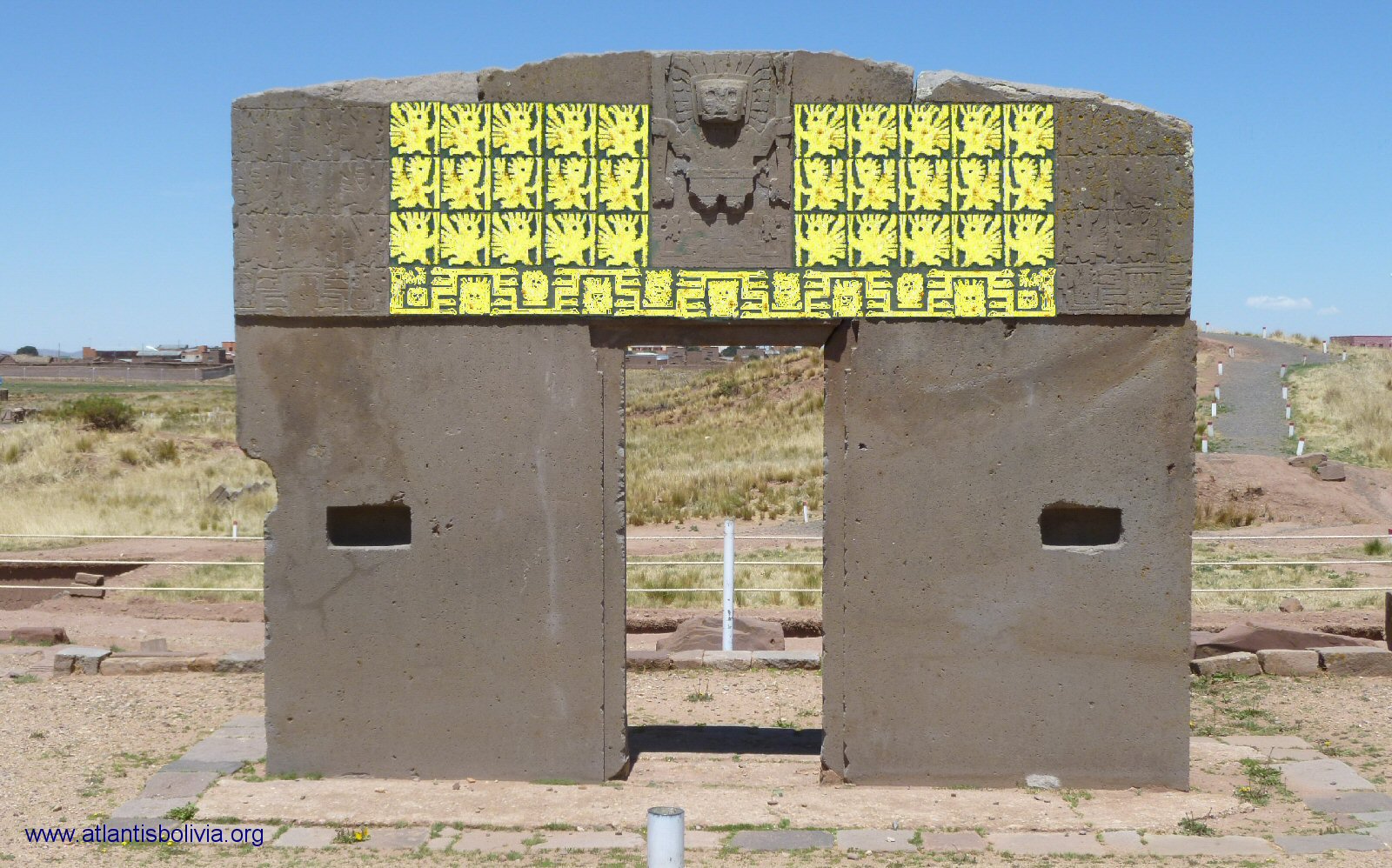
When I published on Youtube an explantion of the workings of the Tiwanaku Calendar, someone wrote in the comments that there were not 3 rows of 5 chasquis per side but 3 rows of 8 chasquis, also he claimed that I had "faked" the lower line to show 11 icons when in fact there were more than this. I had to explain that there were in fact 3 rows of 5 chasquis and the extra 3 chasquis which appeared to make 8 chasquis belonged to a continuation of the design on the original adjacent wall. The Sun Gate is not in it's original position and was not designed to stand alone as it is today, but to be part of a wall around a courtyard in the Kalasasaya complex. Similarly there are in fact 11 icons on the lower line which is called a frieze: there are 11 icons, 40 condor heads and two trumpeters, one at either end which signal when the sun on the horizon ends its travels and begins to return in the opposite direction at the time of the solstices.
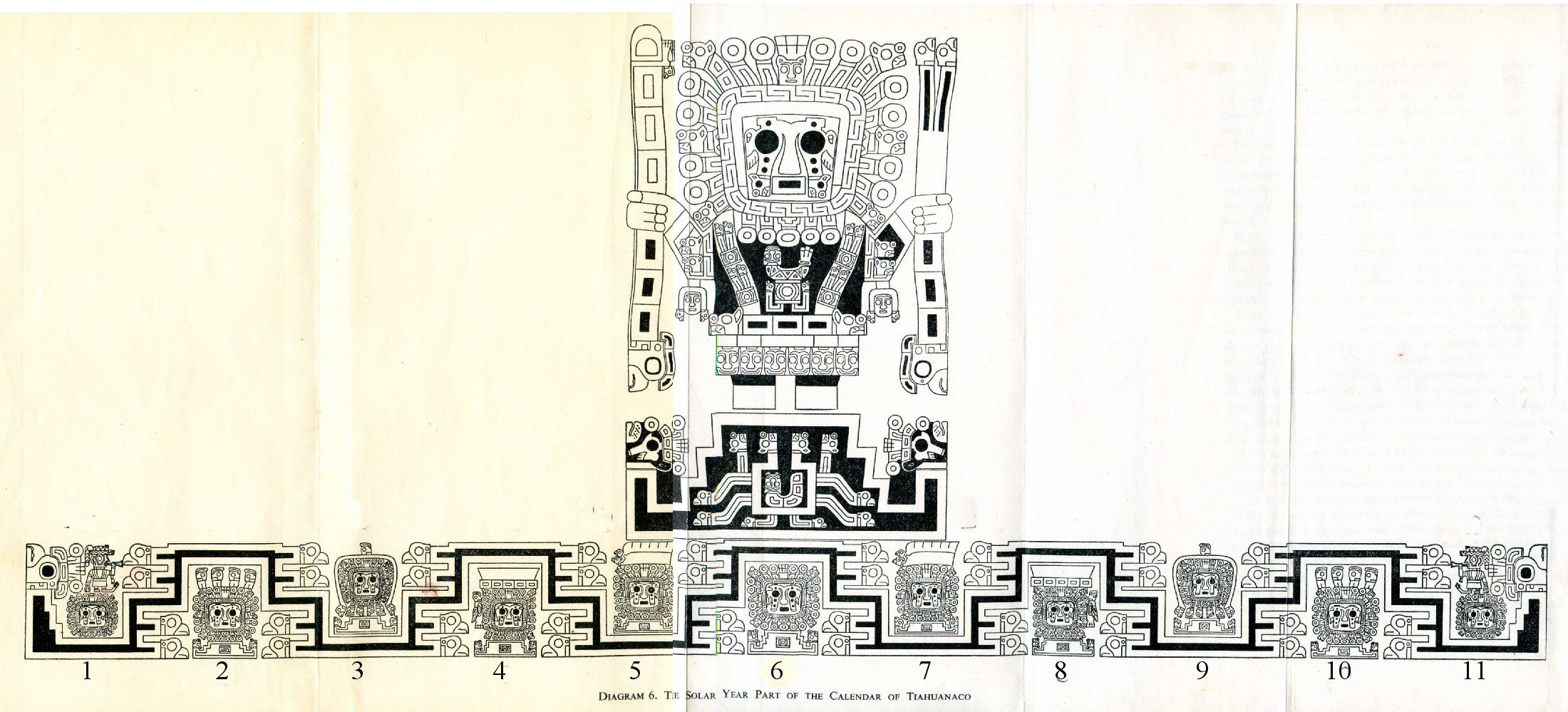
H.S. Bellamy calendar frieze drawing,
we can easily count the 11 icons on the frieze.
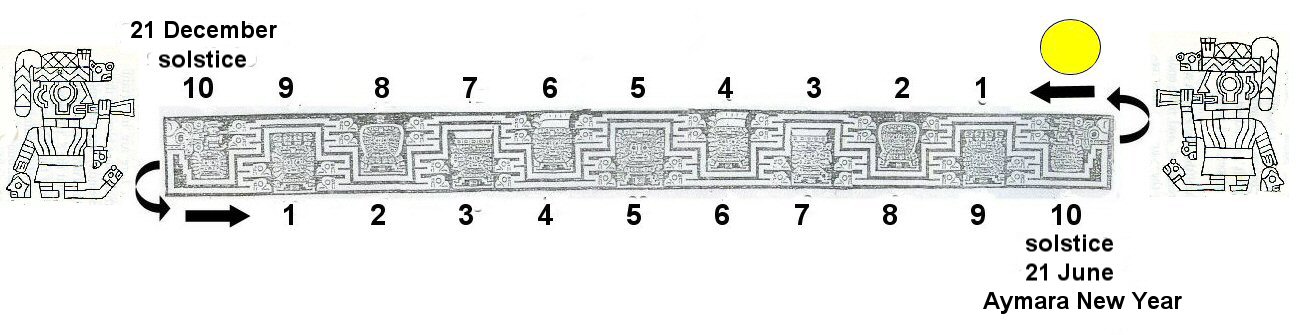
Calendar frieze drawing,
showing the trumpeters and the solstices.
The 11 icons divide the years into 20 parts as the sun moves along the horizon.
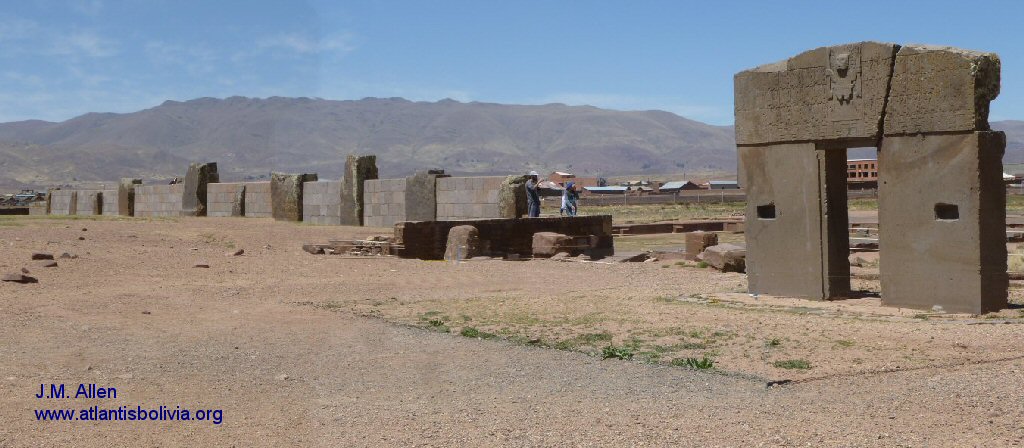
The actual calendar is not the Gate of the Sun, but the wall, originally of 11 pillars, to the left of it.
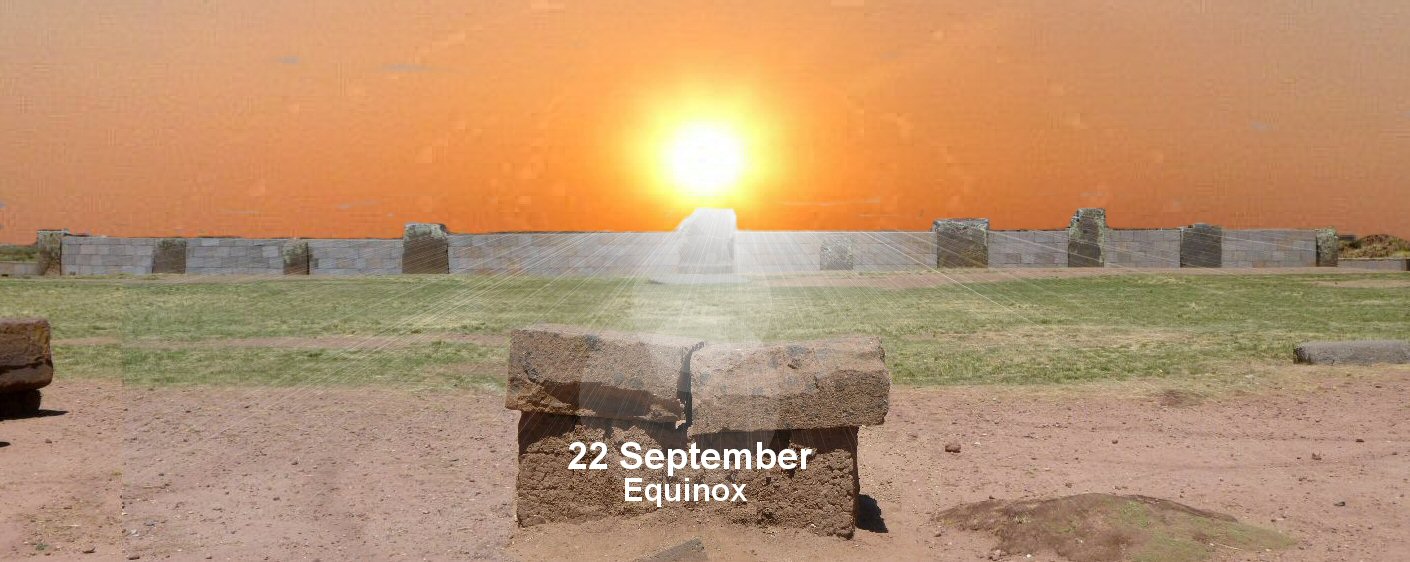
The original viewing position of the sunsets is marked by a block of stone.
This according to Posnansky is where the Gate of the Sun was originally intended to be located.
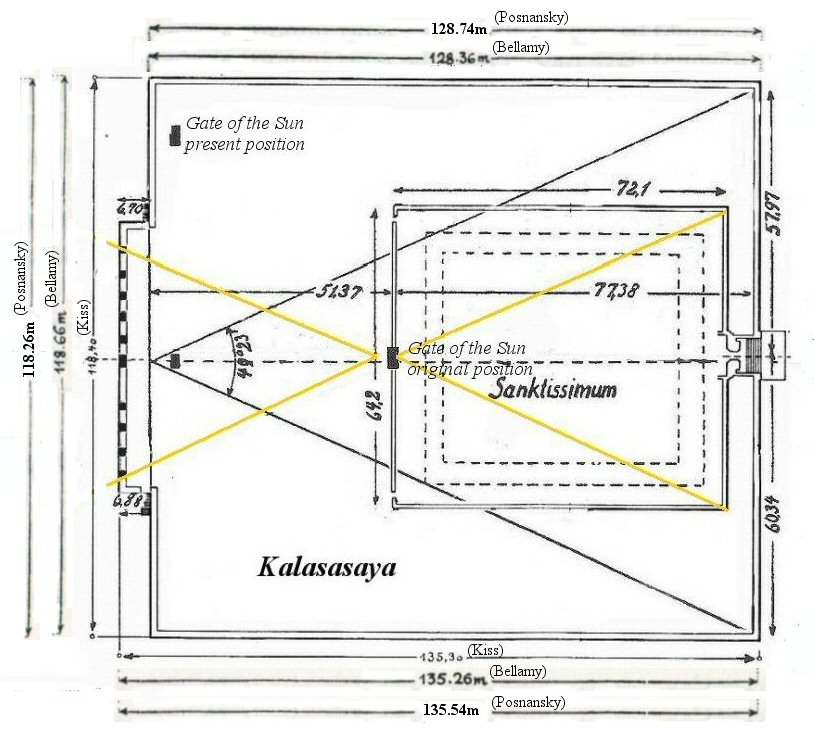
The original position of the Gate of the Sun according to Posnansky.
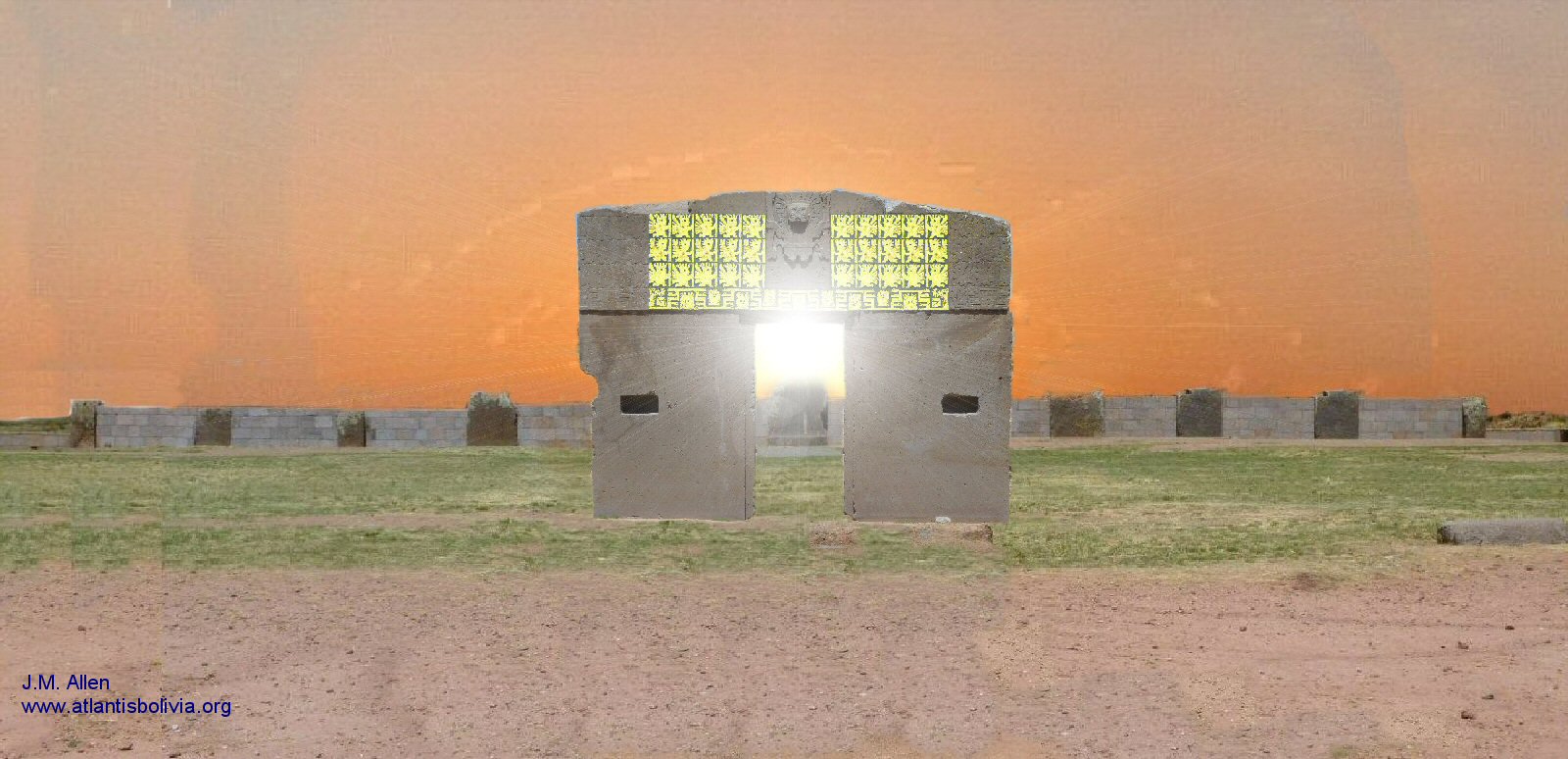
The original viewing position of the sunsets through the Gate of the Sun.
This according to Posnansky is where the Gate of the Sun was originally intended to be located.
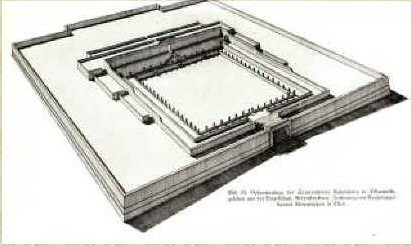
How the Kalasasay wall may have looked like according to Stubel.
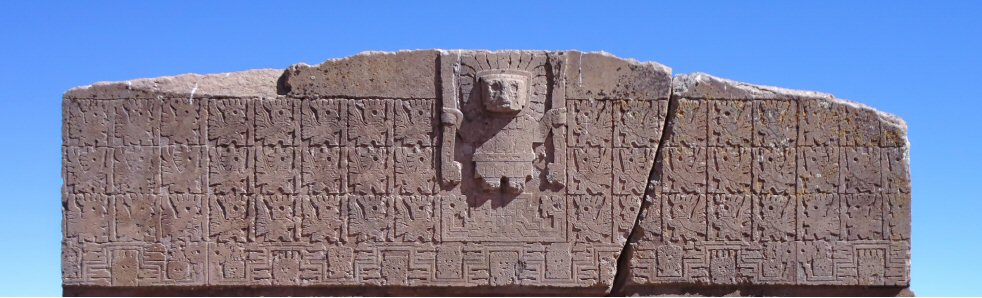
The chasqui figures on the Gate of the Sun.
One can see the 3 rows of 5 chasquis flanked by 3 additional chasquis.
The additional 3 chasquis belonged to a continuation of the design on the original wall.
We should note that the additional 3 chasquis are pointing in the same direction as the inner 5 chasquis.
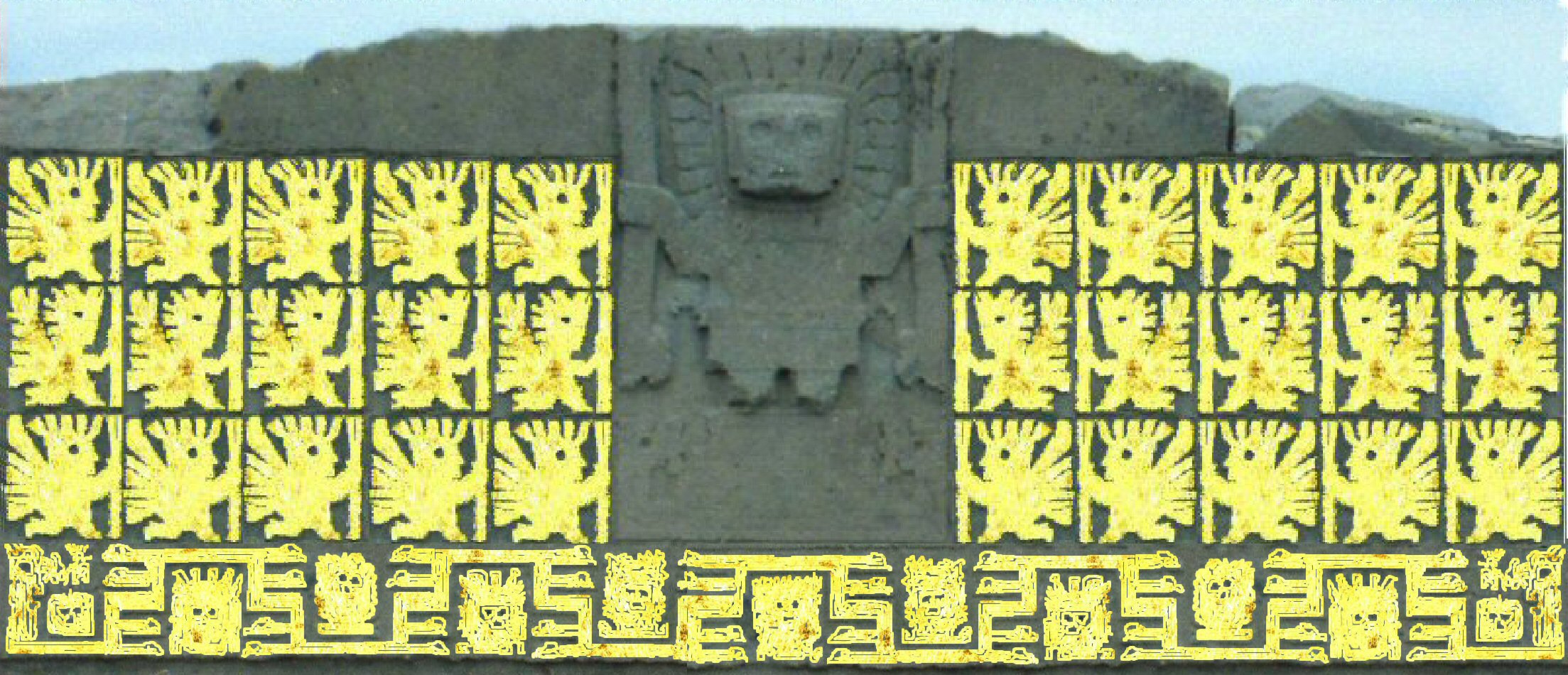
The chasqui figures on the Gate of the Sun.
The 3 rows of 5 chasquis made a total of 30 chasquis which represented 30 solar years.
At the end of this period one month had to be added to the lunar calendars.
This period was also half a Muisca "Great Century" according to the Muisca calendar in Columbia.
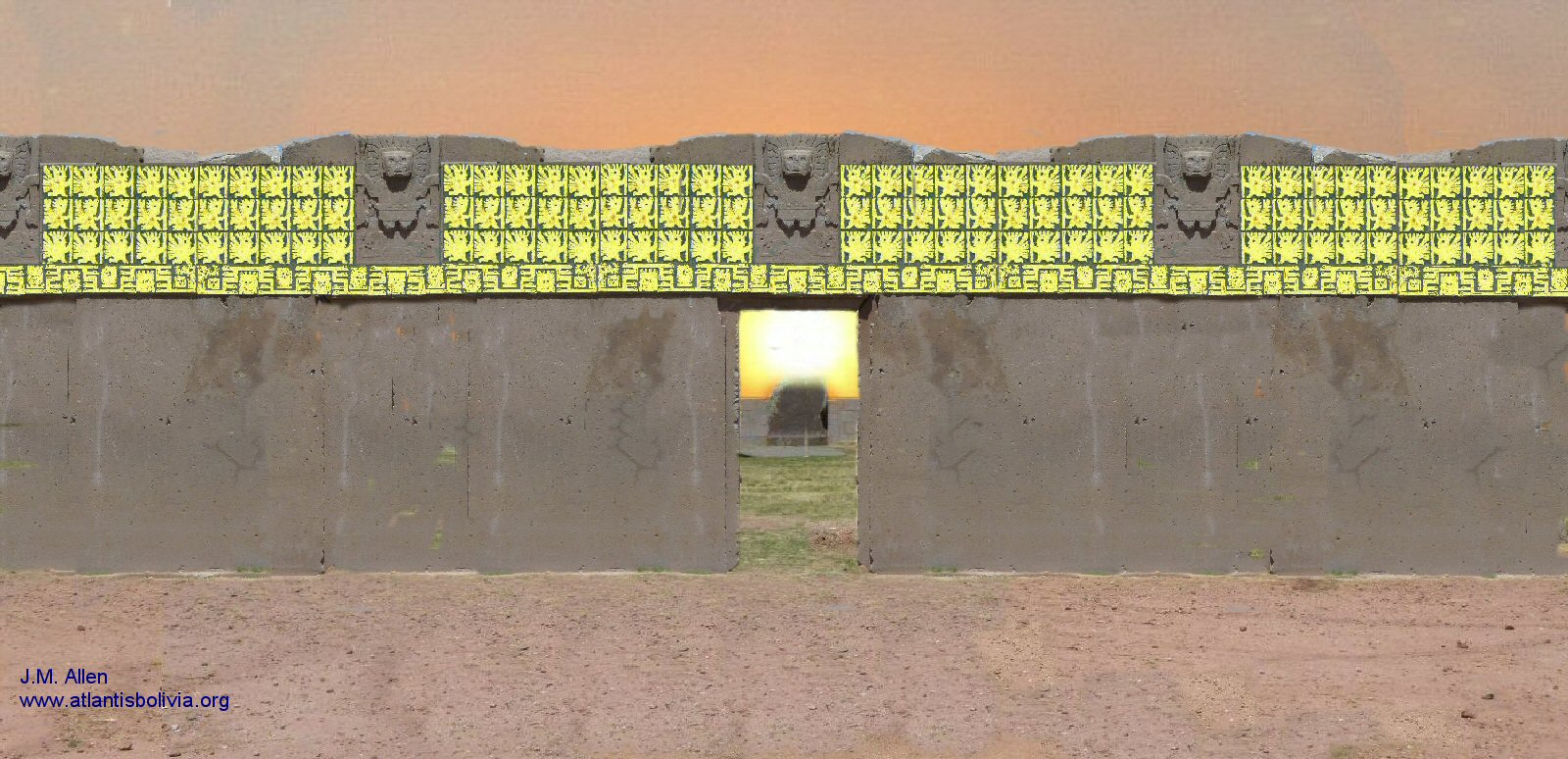
We can now begin to reconstruct the wall, making sure the additional chasquis are facing the correct direction.
We then find that the number of chasquis in the row is not 5 and is not 8, but 10.
Making a total of 60 chasquis which represented 60 solar years
And was known as a "Great Century" according to the Muisca calendar in Columbia.

Expanding the wall shows the original design.
Counting in half centuries of 30 years when the extra months were added
Or centuries of 60 years depending on how you look at it.
A system so ingenious because each "century" of 60 solar years was a block of 20 x 3 years counting of lunar calendar.

The complete wall covered a period of 360 solar years,
ideal for a calendar based on 360 days per year.
J.M. Allen
September 2019
See also
Tiwanaku calendar page